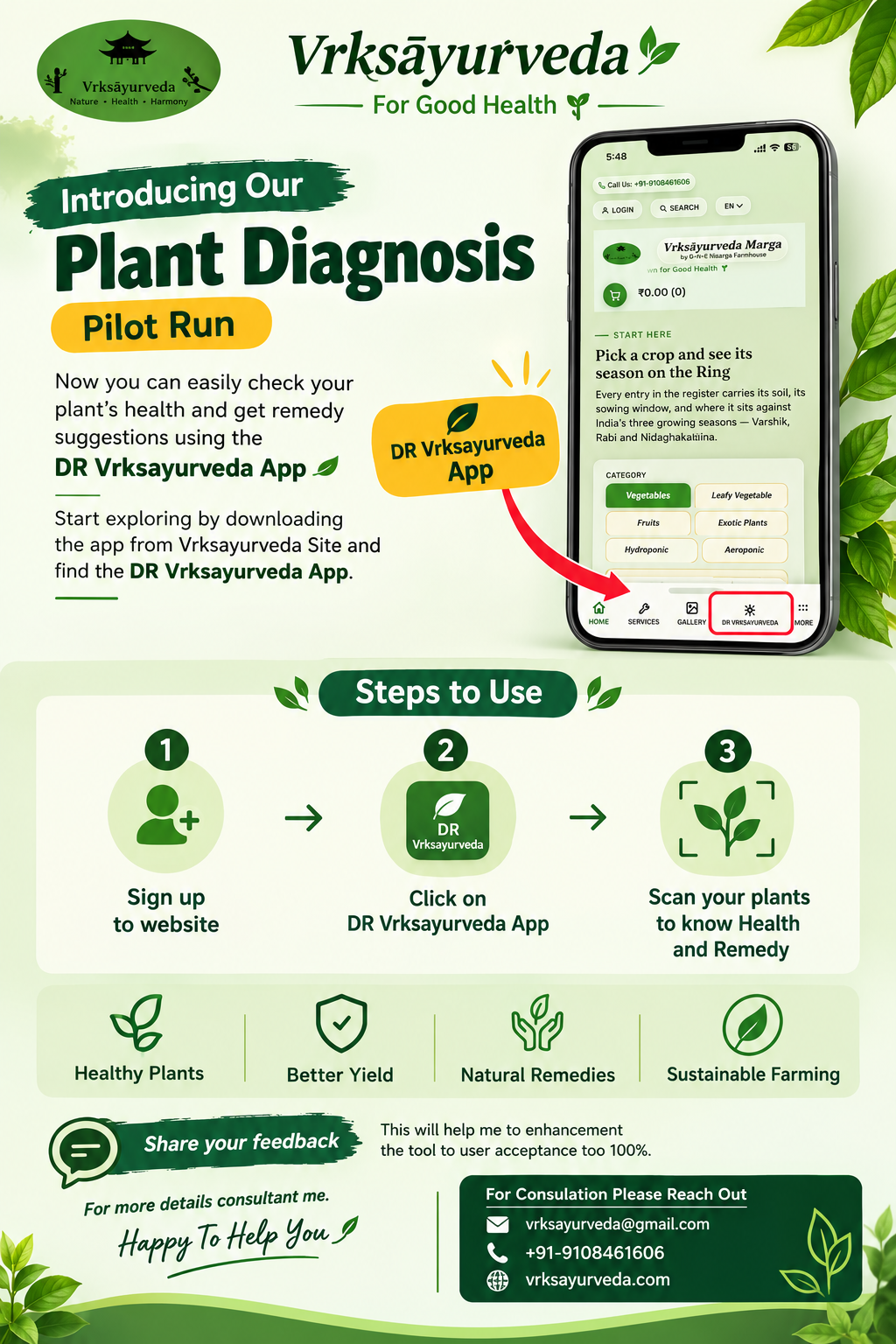
Every entry in the register carries its soil, its sowing window, and where it sits against India's three growing seasons — Varshik, Rabi and Nidaghakalina.
A stage-wise natural fertilizer schedule for whichever crop or fruit is currently selected above — from planting or post-harvest through to the final harvest.
Foundational recipes below, based on Subhash Palekar's Zero Budget Natural Farming.
Note: shelf life is counted from the date each batch is prepared, not from when you first use it — track your preparation date and use or refresh accordingly.
Natural pest and disease sprays that pair with the Jeevamrutha/Beejamrutha routine above — brewed from the same basic ingredients, timed around pest pressure rather than growth stage.
Note: shelf life is counted from the date each batch is prepared, not from when you first use it — track your preparation date and use or refresh accordingly.
Pick a stage, then a track — built for someone starting from zero.
Step-by-step setup for a rooftop or terrace growing space.
Complete Setup and Guidance (Germination to Harvest Cycle)
You want your own setup? We will help in setting up the whole ecosystem.
Grow Own for Good Health
Step-by-step setup for open farmland.
Complete Setup and Guidance
You want your own setup? We will help in setting up the whole ecosystem.
Grow Own for Good Health
Central schemes most relevant to someone starting out in agriculture. Toll-free numbers and portals can change — always verify on the official site before applying.
Note: For reference only — individuals can contact and avail the facility directly. In a few cases, we can guide you to the right team.
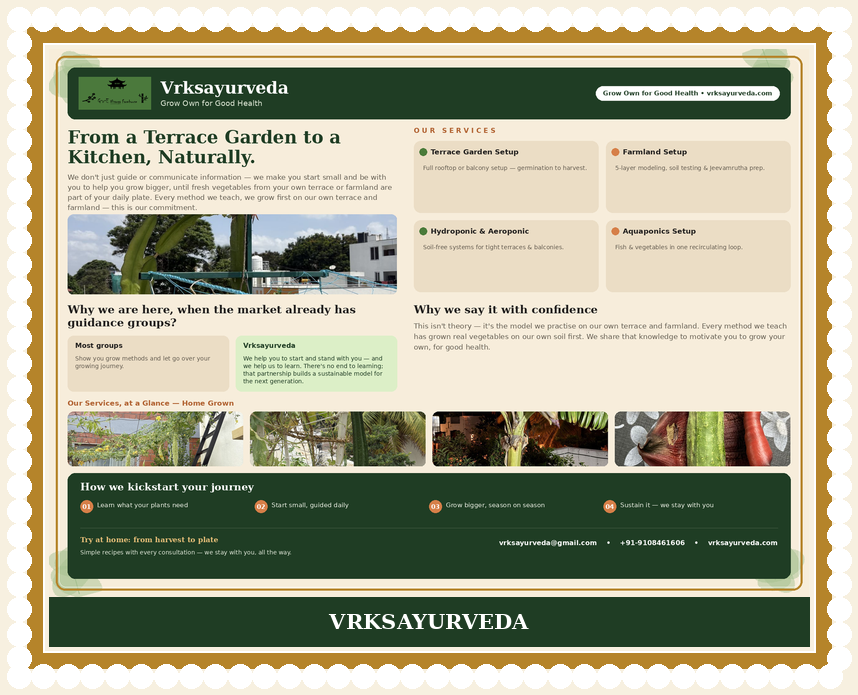
We are natural farming practitioners. Will help in adopting natural farming techniques.
My terrace gardening journey began in 2016 with just a few pots. My first fruit that grew really well was pineapple — and from that small success, the journey truly took off. Over the years, I went on to grow a wide variety of vegetables and fruits.
Setting up the initial grow materials took an entire weekend, but it was an incredibly enthusiastic and rewarding experience. The real challenges came when I started growing different vegetable varieties — that's where I had to learn about pest control and the specific nutrient needs of each plant.
During this time, I was fortunate to be part of a wonderful group in my area called RR Nagar OTG. The knowledge I gained from the mentors there was invaluable, and it gave me the confidence to grow more and more varieties. Over this journey, my knowledge has been shaped by three pillars — the OTG group mentors, online resources, and hands-on self-learning from every stage of growth.
“Grow, learn, and get a good yield — then sow again.”
In these 10 years, I have grown almost every kind of vegetable — both underground crops like Ginger, Turmeric, Potato, and Elephant Foot Yam, and above-ground varieties like Tomato, Brinjal, Bitter Gourd, Ridge Gourd, and Cowpea — along with fruits like Orange, Apple, Banana, and Dragon Fruit.
If you'd like to visit my garden, you are most welcome! Same plants will not be available as shown on the page — I keep growing different ones.
I can also set up a terrace garden for you if you're looking to grow your own fresh vegetables and fruits at home. Feel free to reach out — I'd be happy to help.
Guide on setup, grow cycle, nutrients of all farming service we provide.
You can contact me directly — my details are available on the contact page.
A quick comparison of the three broad approaches to growing food.
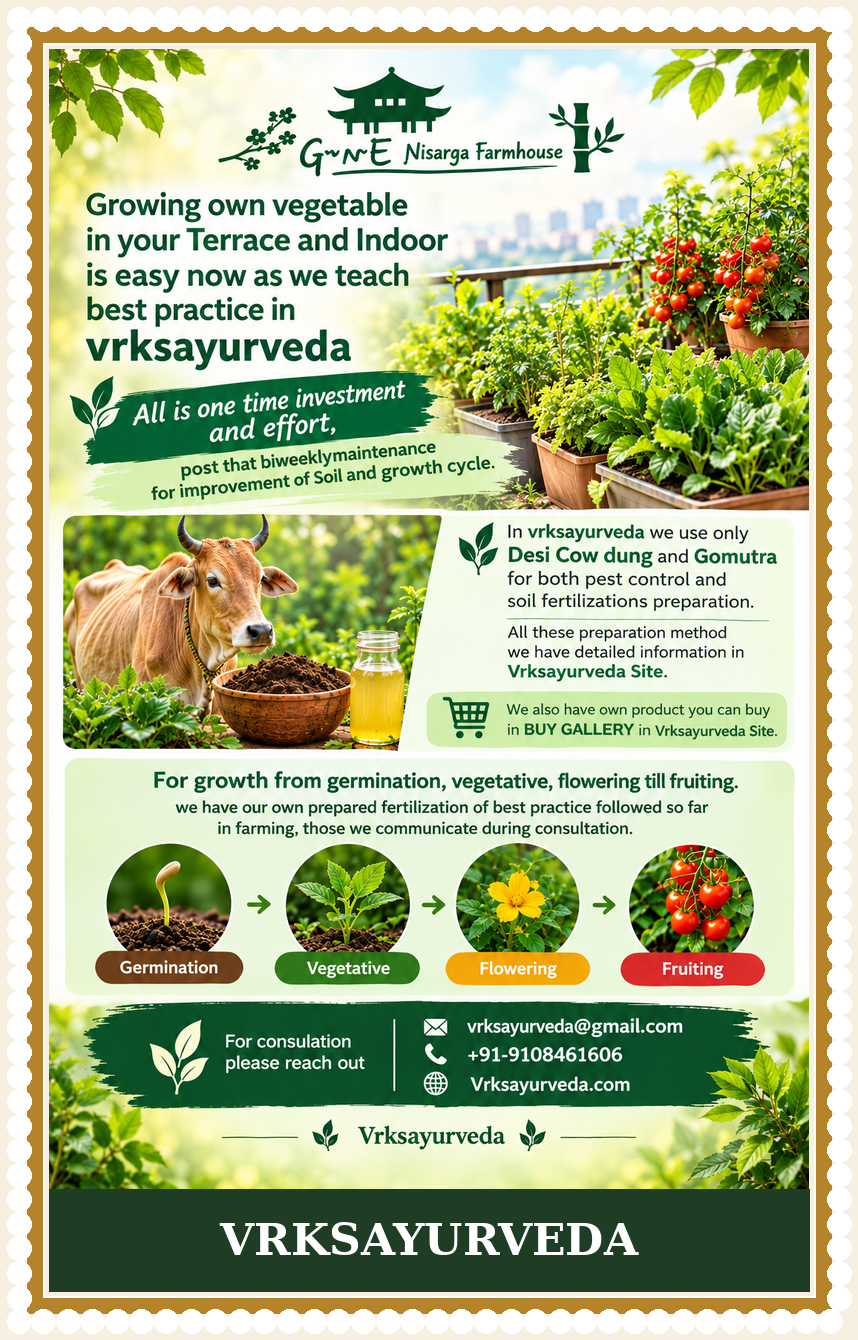
Natural Farming: Grows crops using only on-farm inputs — cow dung, cow urine, jaggery and local biomass brewed into Jeevamrutha and Beejamrutha — with no external fertilizer or pesticide, natural or otherwise.
Organic Farming: Avoids synthetic chemicals but allows off-farm inputs like compost, vermicompost and neem-based products, often certified under a standard such as NPOP.
Chemical Farming: Uses synthetic fertilizers and pesticides for faster, higher-volume yields, but can degrade soil health and biodiversity with continued heavy use.
Pick a category and a growing season to see which fruits and vegetables from the plant register fit that window.
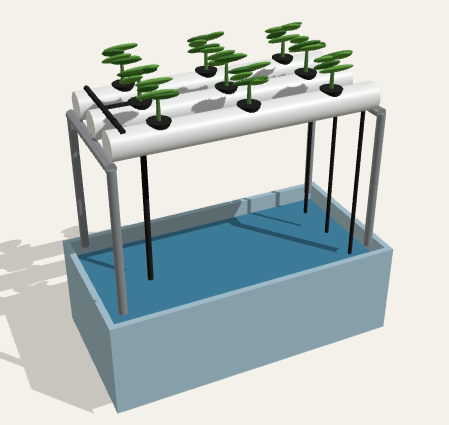
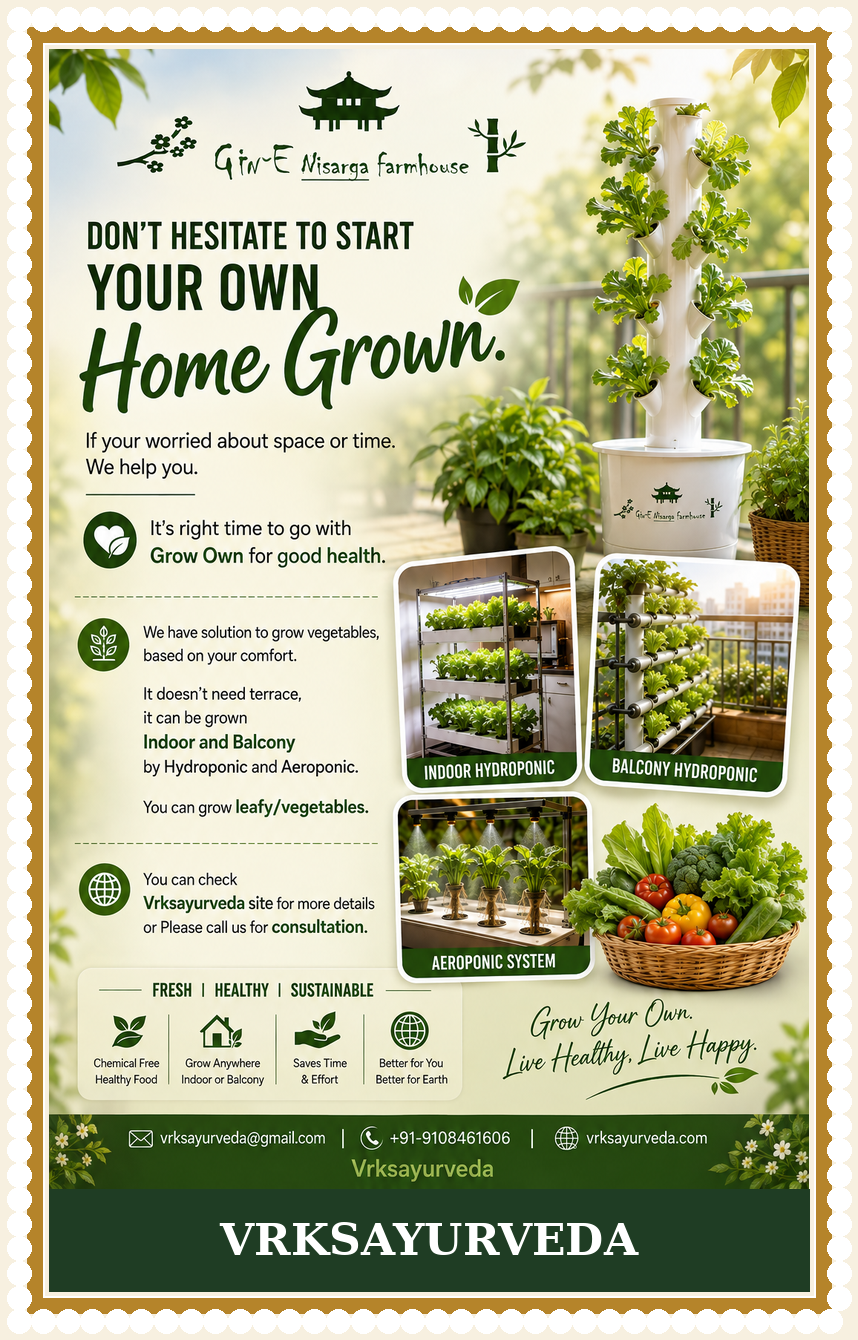
Hydroponics grows plants in a nutrient-rich water solution instead of soil — roots sit directly in the solution or in an inert medium like coco peat, with pumps circulating water and nutrients on a timer.
Space: Vertical and stacked trays grow far more plants per square foot than soil beds, making it a strong fit for terraces and balconies with little floor space.
Cost: Setup costs more upfront than a soil bed (pumps, containers, nutrients), but water use drops sharply since it’s recirculated, and faster, denser growth can offset the initial spend over a few harvests.
Health: No soil means no soil-borne pests or fungal disease, and nutrient levels are precisely controlled — a cleaner, more consistent harvest with less need for chemical intervention.
Complete Setup and Guidance
You want your own setup? We will help in setting up the whole ecosystem.
Grow Own for Good Health
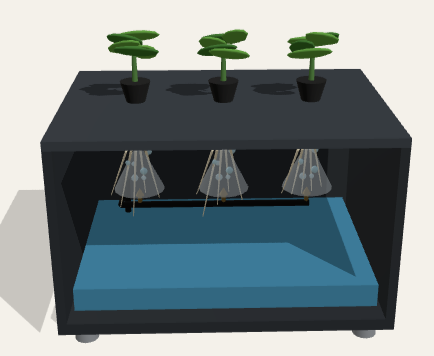
Aeroponics grows plants with roots suspended in open air inside an enclosed chamber, misted with a fine nutrient spray at short intervals instead of sitting in soil or a water reservoir.
Space: With no growing medium at all, roots take up almost no room, so towers and stacked chambers can be packed even tighter than hydroponics — a good fit for very small terrace footprints.
Cost: The highest upfront cost of the soilless methods — misting pumps, timers, and sealed chambers — but water and nutrient use is the lowest of the three since the spray goes straight onto the roots instead of soaking a medium, so it is cheaper to run once built.
Health: Roots get maximum oxygen exposure, which speeds growth and cuts the risk of root rot, and the sealed chamber keeps soil pests and pathogens out entirely.
Complete Setup and Guidance
You want your own setup? We will help in setting up the whole ecosystem.
Grow Own for Good Health
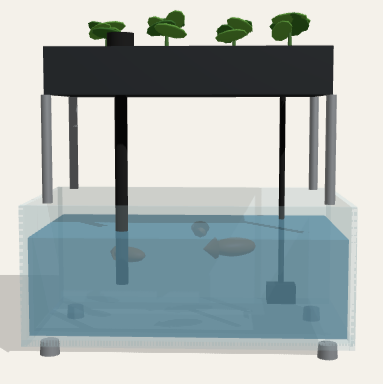
Aquaponics combines fish farming with soilless plant growing in one loop — fish waste feeds beneficial bacteria that turn it into nutrients for the plants, and the plants filter and clean the water that flows back to the fish.
Space: One recirculating system grows both fish and vegetables in the same footprint, so a single tank-and-grow-bed setup replaces what would otherwise be two separate spaces — a good fit for a terrace corner.
Cost: Moderate to build (tank, grow bed, pump, biofilter), and no fertilizer purchase is needed since fish waste supplies the nutrients — though it adds the ongoing cost and care of feeding and maintaining fish alongside the plants.
Health: No synthetic fertilizers or soil-borne disease, and the fish double as a second, protein-rich food source alongside the vegetables — a more complete home food system.
Complete Setup and Guidance
You want your own setup? We will help in setting up the whole ecosystem.
Grow Own for Good Health
Browse by category, pick a quantity, and add to your cart. New products are added regularly.
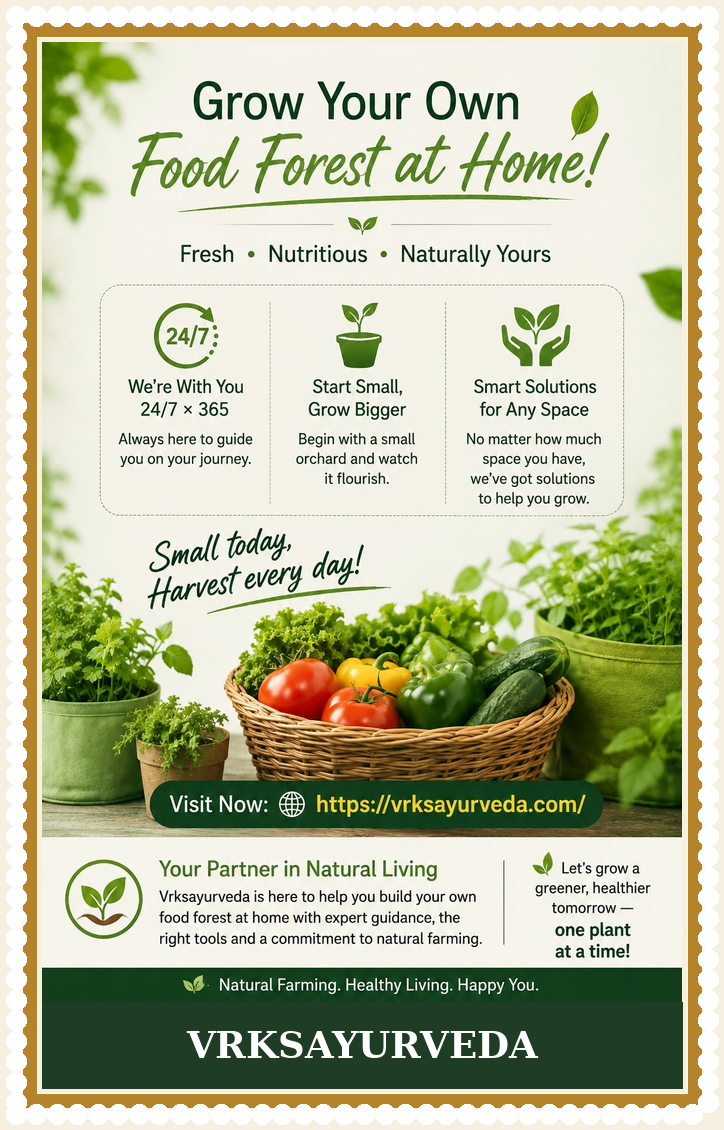
Our motivation & Vision are simple — help people build their own food forest at home, growing fresh, nutritious vegetables and fruit with extra care by using natural farming.
In this journey, we will be with you 24/7 × 365 to motivate you to grow vegetables and fruits in your orchard. Our commitment is to start with a small orchard and help it grow bigger, so you can harvest for your daily needs.
Don't worry about space — we have solutions for space management. You'll still be able to grow your own vegetables for your daily needs.


Started by my wife and me, this Natural Farming initiative isn't rooted in a farming background — it's grown out of more than 10 years of practicing natural farming alongside our IT careers. Our goal is simple: inspire friends, family, and society to start small and grow big, because when you grow your own, you grow good health.
Seasonal tips, new crop additions and farm updates — posted here as they happen.